
In December 2025, a family member approached me and asked if I would take a look at the brand Fightstar Championship. He had invested in the company and wanted my opinion on how their marketing and presentation could be improved. The organisation already has a strong product and a growing audience, so there was clearly potential to build on.
My interest in combat sports goes back many years. As a teenager in the 1980s I trained intensely in Shotokan Karate, studying it almost obsessively. My passion at the time was fuelled by my love of Kung Fu films, which were my favourite genre growing up. I collected magazines and studied how fight scenes were shot, paying close attention to the cinematography and choreography behind them.
Alongside this, I also enjoyed watching boxing with my father. Years later, during the rise of YouTube, I developed a deeper appreciation for the quality of the American boxing broadcasts from the 1970s, 80s, and 90s. Their production style, storytelling, and presentation were exceptional.
In the 1990s I was first introduced to the UFC. At the time, VHS tapes were circulating among enthusiasts. A former classmate of mine, Brett Talis, would often get hold of them and lend them to me. It was incredibly exciting to watch. In many ways it brought to life the kind of mixed-style fighting I had previously only read about in books written by and about Bruce Lee.
Thanks to Dana White’s vision, the UFC eventually transformed the sport, turning it into a global billion-dollar brand. Along the way, many independent MMA promotions emerged. I believe this has been a positive development. The UFC model has evolved into a global system that requires a steady pipeline of international talent, and independent promotions play an essential role in discovering and developing the fighters of the future.
My cousin believes strongly in the potential of Fightstar Championship and the team behind it. His view is that the foundation is solid; it simply needs time, investment, and a stronger, more refined brand identity.
He introduced me to the owners, who were extremely welcoming and generous with their time. They invited me to meet their wider team and gave me complete access to observe the event and contribute creatively. I met two photographers who were part of their dedicated team, along with several videographers who are passionate supporters of MMA and the Fightstar brand.
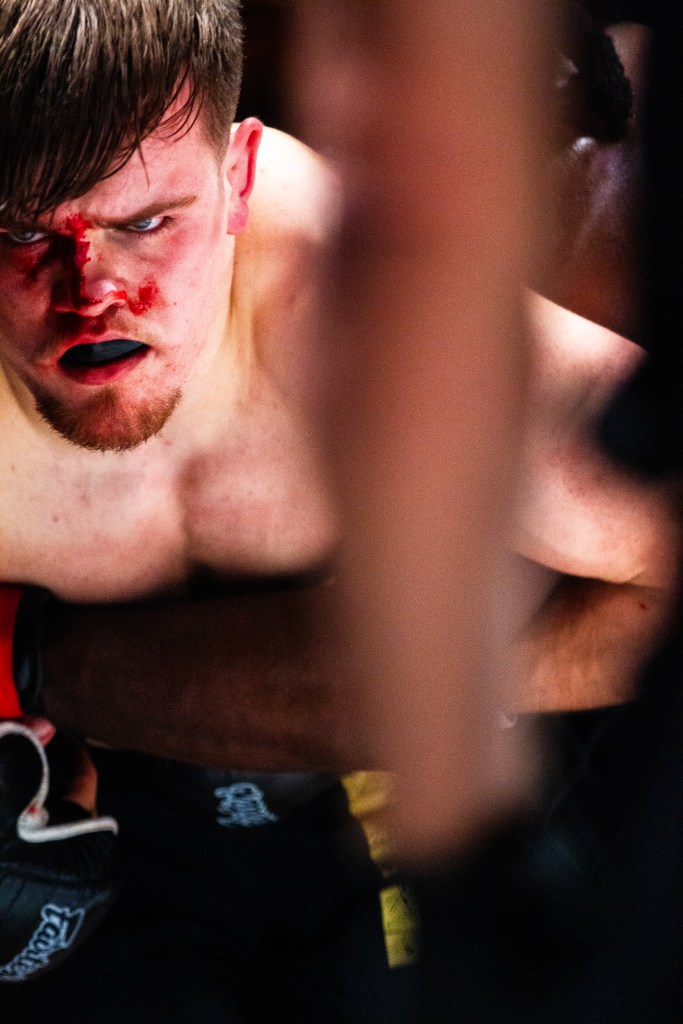
Although I was primarily there to observe and assess, I brought my camera with me to capture the event through my own lens and see what could be created from it. Leaving the event, I have to admit I felt a slight lack of confidence, mainly because there were many experienced MMA photographers and videographers working that night.
However, the real work begins once you return home.
Much of my creative style is influenced by boxing broadcasts and classic Kung Fu cinema. I draw inspiration from the techniques used in those films—both in camera work and editing—as well as the idea of “poetry in motion,” where movement, rhythm, and music work together. The aim is to create something visually exciting that draws viewers toward the fighters and the brand itself.
While I may not have the same level of experience documenting MMA events as some others, what sets my work apart is my eye. That perspective—how I see and interpret moments—is what people ultimately value.
I shared my vision with the team, although bringing it fully to life would require investment and commitment from both sides.
Overall, it was a great experience working with a team that has not only strong energy but also genuine potential. The key step for Fightstar now is to refine and define their identity, ensuring consistency across everything they produce so that the brand carries a recognisable and cohesive presence.
They already have the essential elements: the events, the fighters, and the audience. The challenge now lies in how the brand is presented to the public and how that connection is built.
Today, audiences want much more than just the fights themselves. They want to follow the journey—stories, personalities, and behind-the-scenes moments. Creating that kind of content takes time, effort, and a clear creative direction.
There is a lot of work to be done and plenty still to explore.
Below are some of the videos I filmed and edited from the event, along with the music I also created to accompany them.
 Pritt Kalsi